
I. Schäfer, E. Müller, A.M. Nijhof, H. Aupperle-Lellbach, G. Loesenbeck, S. Cramer, T.J. Naucke

Parasites & Vectors volume 15, Article number: 296 (2022)

Abstract

Background: Hepatozoon canis is a protozoal agent that is known to be transmitted by oral uptake of H. canis‑infected Rhipicephalus sanguineus sensu lato ticks in dogs. Vertical transmission of H. canis has only been describedonce in a study evaluating dogs from Japan. The aim of this study was to investigate the parasitological status of pup‑pies from a bitch that had tested positive for Hepatozoon spp. prior to giving birth.

Findings: A 4‑year‑old, female, pregnant dog imported from Italy (Sardinia) to Germany showed clinical signs of leth‑argy and tachypnoea and tested positive for H. canis by PCR. The dog gave birth to eight puppies, one of which wasstillborn and another that had to be reanimated. Haematology, buffy coat analysis and a biochemistry profile wereperformed for each dog. EDTA‑blood of the surviving seven puppies and bone marrow, liver, spleen, amniotic fluid,and umbilical cord of the stillborn puppy was tested for the presence of Hepatozoon spp. by PCR. The mother and the seven surviving puppies tested positive for H. canis by PCR at day 62 post‑partum. Gamonts weredetected in all dogs by buffy coat evaluation. Haematological and biochemistry results revealed mild abnormalities. Inthe stillborn puppy, spleen, umbilical cord, and amniotic fluid were positive for H. canis.

Conclusion: The results confirm that vertical transmission is a possible route of H. canis infection in dogs, dem‑onstrated by molecular detection of the pathogen in the stillborn puppy. In the seven surviving puppies, vertical transmission was the most likely transmission route. A potential impact of the level of parasitaemia on the health of puppies, as well as its pathogenesis, should be investigated further.
Download (extern)

L. Könenkamp, U. Ziegler, T. Naucke, M.H. Groschup, I. Steffen

Transboundary and Emerging Diseases, June 2022 69(7)

Abstract: Flavivirus diagnostics are complicated by substantial cross-reactivity of antibodiesbetween different flavivirus species. This is of particular importance in regions withmultiple endemic flaviviruses in co-circulation. Tick-borne encephalitis virus (TBEV) isthe causative agent of tick-borne encephalitis, the most common infection of the cen-tral nervous system in endemic regions of Europe and Asia. Since 2018, the relatedWest Nile virus (WNV) has spread to Germany where its geographic distributionoverlaps with TBEV endemic regions. Besides humans, various animal species aresusceptible to TBEV and WNV infection. To compare antibody responses againstthese flaviviruses and test for cross-reactivity, we developed a multi-species luciferaseimmunoprecipitation system antibody detection assay for several different antigens.We performed a serosurvey of 682 dogs from five different European countries todetect antibodies against TBEV and WNV. Twelve specimens were positive for TBEVNS1 only and seven for WNV NS1 only. Two specimens were reactive to both NS1antigens and another two were equivocal for WNV NS1. Interestingly, 89.5% of pos-itive specimens had TBEV/WNV or WNV/TBEV signal ratios of 10 to >300 betweenindividual NS1 antigens, allowing for a clear distinction between the two viruses. Theremaining 10.5% of reactive specimens showed a five- to 10-fold difference betweenthe two viruses and included possible dual exposures to both viruses. In contrast,equivocal samples showed low signal ratios between the NS1 antigens, suggestingunspecific reactivity. Based on these data, we found the NS1 protein to be a suit-able antigen to distinguish between TBEV- and WNV-specific antibodies in dogs withsensitivity and specificity similar to virus neutralization tests.

Download (extern)

I. Wright, F. Jongejan, M. Marcondes, A. Peregrine, G. Baneth, P. Bourdeau, D.D. Bowman, E.B. Breitschwerdt, G. Capelli, L. Cardoso, F. Dantas-Torres, M.J. Day, G. Dobler, L. Ferrer, L. Gradoni, P. Irwin, V.A.J. Kempf, B. Kohn, F. Krämer, M. Lappin, M. Madder, R.G. Maggi, C. Maia, G. Miró, T. Naucke, G. Oliva, D. Otranto, M.G. Pennisi, B. L. Penzhorn, M. Pfeffer, X. Roura, A. Sainz, S. Shin, L. Solano-Gallego, R. K. Straubinger, S. Tasker, R. Traub & S. Little

Parasites Vectors 13, 546 (2020)

Abstract: The Companion Vector-Borne Diseases (CVBD) World Forum is a working group of leading international experts who meet annually to evaluate current scientific findings and future trends concerning the distribution, pathogenesis, clinical presentation, diagnosis and prevention of vector-borne infections of dogs and cats. At the 14th Symposium of the CVBD World Forum in Trieste, Italy (March 25–28, 2019), we identified the need to (i) bring attention to the potential spread of parasites and vectors with relocated dogs, and (ii) provide advice to the veterinary profession regarding the importance of surveillance and treatment for parasites and vector-borne infections when rehoming dogs. This letter shares a consensus statement from the CVBD World Forum as well as a summary of the problem faced, including the role of veterinary professionals in parasite surveillance, causal issues, and the importance of interdisciplinary cooperation in addressing the problem. To limit opportunities for dissemination of parasites and vectors, whenever possible, underlying problems creating the need for dog rehoming should be addressed. However, when it is necessary to rehome dogs, this should ideally take place in the country and national region of origin. When geographically distant relocation occurs, veterinary professionals have a vital role to play in public education, vigilance for detection of exotic vectors and infections, and alerting the medical community to the risk(s) for pathogen spread. With appropriate veterinary intervention, dog welfare needs can be met without inadvertently allowing global spread of parasites and their vectors.

Download (extern)

S. Oerther, H. Jöst, A. Heitmann, R. Lühken, A. Krüger, I. Steinhausen, C. Brinker, S. Lorentz, M. Marx, J. Schmidt‑Chanasit, T. Naucke and N. Becker

Parasites Vectors 13, 173 (2020)

Abstract
Background: Vector‑borne diseases (VBD) are of growing global importance. Sand flies are potential vectors forphleboviruses (family Phenuiviridae) including Toscana virus (TOSV), Sicilian virus, Sandfly fever, Naples virus, and Leishmania parasites in Europe. To date, only two phlebotomine species have been recorded for Germany: Phlebotomus perniciosus and Phlebotomus mascittii. This study updates the distribution and abundance of the two occurringspecies.

Methods: An entomological field study was carried out during 2015–2018 to assess the abundance of sand flies inSouthwest Germany within the federal states Baden‑Wuerttemberg (BW) and Rhineland‑Palatinate (RLP). A total of 176 collection sites were examined using CDC light traps.

Results: A total of 149 individuals of P. mascittii were collected. During 2015–2018, P. mascittii was found at all sitesknown positive from previous studies and was detected at 15 additional sites previously unknown for the presenceof sand flies. Although the environment has changed considerably in 30 years, no significant difference in sand flydynamics and distribution was found. Phlebotomus perniciosus has only been trapped once since 2001.

Conclusions: This study showed that sand flies occur in different areas in Southern Germany where they had notbeen recorded previously. Therefore, it can be assumed that they are more widespread than expected. In addition,sand flies could be found over several years at the same trapping sites, indicating population stability. This supportsthe need for continued surveillance of possible vector populations and urgent clarification of the vector competenceof P. mascittii.

Download (extern)

F. Dantas-Torres, G. Miró, G. Baneth, P. Bourdeau, E. Breitschwerdt, G. Capelli, L. Cardoso, M.J. Day, G. Dobler, L. Ferrer, P. Irwin, F. Jongejan, V.A.J. Kempf, B. Kohn, M. Lappin, S. Little, M. Madder, R. Maggi, C. Maia, M. Marcondes, T.J. Naucke, G. Oliva, M.G. Pennisi, B.L. Penzhorn, A. Peregrine, M. Pfeffer, X. Roura, A. Sainz, S. Shin, L. Solano-Gallego, R.K. Straubinger, S. Tasker, R. Traub, I. Wright, D.D. Bowman, L. Gradoni, D. Otranto

Online Report in Emerg. Infect. Dis. 2019 Dec;25(12):1-4.

Abstract: Dogs are the main reservoir of Leishmania infantum and in some countries have been regularly culled as part of government policy to control visceral leishmaniasis. At the 13th Symposium of the Companion Vector-Borne Diseases World Forum in Windsor, UK, March 19-22, 2018, we consolidated a consensus statement regarding the usefulness of dog culling as a means of controlling visceral leishmaniasis. The statement highlighted the futility of culling infected dogs, whether healthy or sick, as a measure to control the domestic reservoir of L. infantum and reduce the risk for visceral leishmaniasis.

Download (extern)

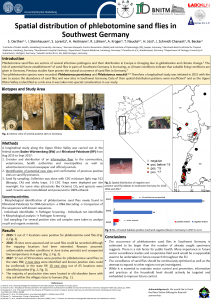
S. I. Oerther, I. Steinhausen, S. Lorentz, A. Heitmann, R. Lühken, A. Krueger, T. J. Naucke, H. Jöst, J. Schmidt-Chanasit, N. Becker

Poster at the 7th International SOVE Congress, October 2017

Abstract: Phlebotomine sand flies are vectors of several infectious pathogens and their distribution in Europe is changing due to globalization and climate change. Two phlebotomine species are known to be present in Germany: Phlebotomus perniciosus and Phlebotomus mascittii. A longitudinal study along the Upper Rhine Valley was carried out in the federal states Baden-Württemberg (BW) and Rhineland-Palatinate (RP) from Aug 2015 to Sept 2017. In 2017 17 out of 99 locations were positive for phlebotomine sand flies. In the state BW, 2 new sites were identified and known positive sites could be confirmed. In the state RP 10 new sites out of 65 locations were identified positive. The majority of productive sites were located in old obsolete barns with clay soil within the villages close to humans.

Download

Ramon M. Eichenberger, Saša Štefanić, Torsten J. Naucke, Mindaugas Šarkūnas, Gintaras Zamokas, Felix Grimm, Peter Deplazes

Veterinary Parasitology, Volume 243, 30 August 2017, Pages 162-168

Abstract: Babesia canis is the predominant Babesia species in dogs in Europe and is responsible for a severe and fatal disease. An increase in global pet tourism and a widening of the geographic distribution of the tick vector has led to the emergence of infections in areas where previously only imported cases have been reported. Due to the potential for rapid and serious disease progression, direct parasite detection by stained blood smears and light microscopy or DNA-based methods have traditionally been used for the diagnosis of acute infections. This study describes the production of a murine monoclonal antibody (‘mAb BcFIII 7/1/2’) that reacts to a 65 kDa corpuscular epitope present in B. canis-infected erythrocytes and can be used in an ELISA to detect circulating Babesia antigen during acute infections. The sensitivity of the ELISA was 100% (95%CI: 84.5–100) as determined using blood lysate samples from 27 dogs with acute B. canis infections. Sensitivity was reduced to 53.8% in 13 patent Babesia vogeli infections (95%CI: 26.1–79.6) based on the current test design using convalescent serum from a B. canis-infected dog. The specificity was determined to be 86.4% (95%CI: 64–96.4) using 22 samples from healthy canine blood donors. In the course of acute B. canis infections, the ELISA showed a positive result at the same time as a positive PCR result was recorded. This was 24 to 48 hours before parasites could be detected by light microscopy. Convalescent samples collected from 6 B. canis-infected dogs at least 14 days post treatment resulted in negative ELISA reactions.

Download (extern)

 Gefahr geht nicht nur von Sandmücken aus 

Torsten J. Naucke, Tierärztliche Umschau, April 2016, 71(4):130

Abstract: Die Zahl Leishmaniose-infizierter Hund esteigt in Deutschland durch den Import von Hunden aus Endemiegebieten und reisebegleitende Hunde immer mehr an. Lange Zeit ging man jedoch davon aus, dass für Hunde in Deutschland keine Ansteckungsgefahr besteht. Doch das stimmt wohl nicht. Die Tierärztliche Umschau sprach mit dem Parasitologen Dr. Torsten Naucke von der Universität Hohenheim und Reisekrankheitenexperte vom Veterinärlabor Laboklin, Bad Kissingen, über die neuesten Erkenntnisse.

Download

Die Liste praxisrelevanter, durch Vektoren übertragener Infektionskrankheiten in Deutschland wächst stetig. An Bedeutung gewinnt dabei auch immer mehr die Herzwurmerkrankung (kardiovaskuläre Dirofilariose) des Hundes. Dabei handelt es sich um eine schwere und potenziell tödliche Erkrankung, die durch Fadenwürmer der Gattung Dirofilaria immitis ausgelöst wird. Die Krankheit kommt zwar hauptsächlich beim Hund vor, Endwirte sind aber auch Katzen und Füchse. Gelegentlich können Herzwürmer auch auf Menschen übertragen werden.

Download

Abstract

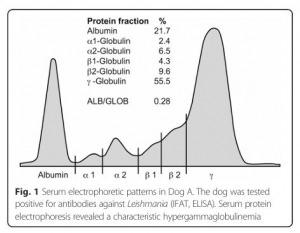
Background: Canine leishmaniosis (CanL) is an important zoonosis caused by Leishmania (L.) infantum. Transmission of L. infantum to dogs (and humans) is mainly through the bite of infected sandflies, but the parasite can also be transmitted vertically, venereally and through blood transfusions of infected donors. Additionally, the direct dog-to-dog transmission through bites or wounds is suspected.

Results: In December 2015, a female eight-year-old Jack-Russell-Terrier was tested positive for CanL in Germany (ELISA 74,
IFAT 1:4.000). The dog had never been in an endemic area, had never received a blood transfusion and had never been
used for breeding. Another female Jack-Russell-Terrier (born 2009 in Spain) was kept in the same household between 2011 and 2012. That
dog was imported to Germany in 2011 and was tested positive for leishmaniosis in 2012. The Spanish-born dog had
received several bite wounds, i.a. in the neck, during fights with the German-born Terrier.

Conclusion: This may be the first report of transmission of L. infantum through bite wounds from a naturally infected
dog in Germany.

Keywords: Canine leishmaniosis, Dog-to-dog transmission, Bite wounds, Germany

Download